Kicking off with CTR benchmarks for banner ads, understanding these metrics is crucial for any digital marketer aiming to enhance ad efficacy. In the competitive landscape of online advertising, knowing the average click-through rates across various industries can provide valuable insights into your ad performance and help set realistic expectations.
CTR benchmarks serve as a guiding light, allowing you to assess how well your banner ads are resonating with your target audience. By diving deep into the factors influencing these rates, such as ad placement, design, and audience targeting, marketers can devise strategies that not only improve performance but also maximize return on investment.
Understanding CTR Benchmarks for Banner Ads
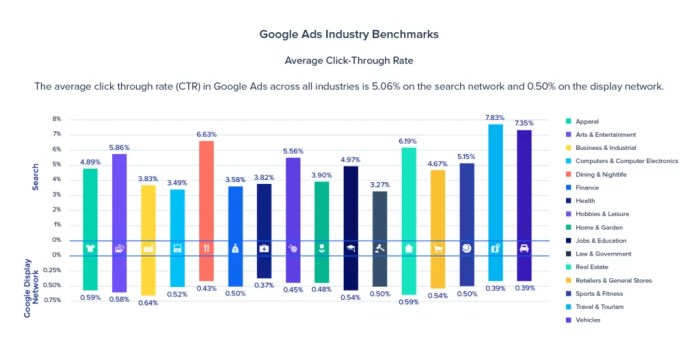
The Click-Through Rate (CTR) benchmarks play a crucial role in assessing the effectiveness of banner advertising. By understanding these benchmarks, advertisers can evaluate the performance of their campaigns and optimize their strategies accordingly. CTR is a key performance indicator that reflects the percentage of users who click on an ad after viewing it, providing insights into the ad’s relevance and appeal.The average CTR rates can vary significantly across different industries.
This variability indicates how audience behavior, market dynamics, and ad placements can affect engagement. Research shows that the average CTR for display ads generally hovers around 0.05% to 0.1%. However, specific industries experience different benchmarks. For instance, the finance and insurance sectors tend to have higher CTRs, averaging around 0.1% to 0.2%, while entertainment and media sectors might see figures closer to 0.02% to 0.05%.
Understanding these differences allows advertisers to set realistic performance expectations based on their industry landscape.
Factors Influencing CTR Benchmarks
Several factors play a significant role in determining the CTR benchmarks for various ad placements. Recognizing these elements helps advertisers refine their approaches and improve overall campaign performance. Key influencing factors include:
- Target Audience: The demographic and psychographic characteristics of the target audience can greatly influence engagement levels. Ads tailored to specific interests and behaviors tend to achieve higher CTRs.
- Ad Design and Creativity: Engaging visuals, compelling copy, and clear calls to action significantly impact the likelihood of clicks. Ads that stand out and resonate with viewers are more effective.
- Ad Placement: The position of the ad on a webpage, such as above the fold, within content, or in a sidebar, affects visibility and engagement. Ads placed in prominent positions generally yield higher CTRs.
- Ad Relevance: The alignment of the ad content with the interests of the audience is crucial. Ads that provide value and relevance to users lead to higher click-through rates.
- Seasonality and Timing: Certain periods, such as holidays or special events, may affect user behavior and interaction with ads. Ads that align with seasonal trends can see improved performance.
In conclusion, understanding these factors allows marketers to tailor their strategies better, leading to improved CTRs and overall advertising effectiveness.
Effective Strategies for Improving Banner Ad Performance
Creating visually compelling and high-performing banner ads requires a blend of creativity and strategic planning. Effective banner ads not only catch the viewer’s eye but also compel them to take action. To achieve a successful ad campaign, it’s essential to understand various methodologies that enhance both the visual impact of ads and their overall performance metrics. This section delves into practical strategies for designing effective banner ads and optimizing their performance through data-driven techniques.
Designing Visually Appealing Banner Ads
The design of a banner ad plays a crucial role in attracting clicks and engaging potential customers. To create a banner ad that stands out, consider the following key elements:
- Clear Branding: Ensure that your brand logo is prominently displayed to enhance brand recognition.
- Color Psychology: Utilize colors that evoke the desired emotional response, such as blue for trust or red for urgency.
- Strong Call-to-Action (CTA): Use action-oriented phrases like “Shop Now” or “Learn More” to guide users towards the next step.
- High-Quality Images: Incorporate striking visuals that align with your message and resonate with your target audience.
- Minimal Text: Keep text concise and to the point; too much information can overwhelm viewers and lead to disengagement.
A/B Testing for Optimization
A/B testing is an invaluable method for optimizing the click-through rate (CTR) of banner ads. It involves creating two variations of an ad and measuring their performance against each other. This process allows marketers to determine which elements resonate better with their audience.The importance of A/B testing lies in its ability to provide data-driven insights. By systematically changing one variable at a time—such as the image, headline, or CTA—you can identify what works best.
For example, a company may find that a blue button significantly outperforms a red button, leading to a higher CTR.
“Testing different ad elements is not just beneficial; it’s essential for maximizing the effectiveness of your campaigns.”
Key Metrics for Evaluating Banner Ad Success
Monitoring the right metrics is vital for assessing the performance of banner ads. Here are crucial metrics to consider:
- Click-Through Rate (CTR): This percentage indicates how many users clicked the ad compared to those who viewed it. A higher CTR often signifies a more effective ad.
- Conversion Rate: This metric measures the percentage of users who completed a desired action after clicking the ad, such as making a purchase or signing up for a newsletter.
- Impressions: Tracking the number of times an ad is displayed provides insight into its reach and visibility.
- Cost Per Click (CPC): Understanding how much you spend for each click helps to evaluate the financial effectiveness of your campaigns.
- Return on Investment (ROI): Calculating ROI allows businesses to understand the financial return generated from their advertising expenditures.
Integrating Banner Advertising with Other Digital Marketing Channels
In today’s digital landscape, integrating various marketing channels is crucial for maximizing reach and engagement. Banner ads serve as a prominent tool within an overall internet marketing strategy, complementing other initiatives to create a cohesive brand experience. When harmonized with different channels, banner ads can not only drive traffic but also enhance overall campaign effectiveness.
Role of Banner Ads in Internet Marketing Strategy
Banner ads play a significant role in raising brand awareness and engaging potential customers. They can be strategically placed on websites, social media platforms, and apps to target specific demographics. When incorporated into a broader marketing strategy, banner ads can effectively guide users through the sales funnel. They can serve as the initial touchpoint, prompting users to learn more or take action, thereby aligning with goals of lead generation and conversion.
Comparison of Banner Ads with Email Marketing
When analyzing the performance of banner ads versus email marketing, click-through rates (CTR) reveal distinct differences. Typically, email marketing boasts higher engagement rates, often reaching CTRs of 3% to 5%, while banner ads average around 0.05% to 0.2%. This disparity highlights the personalized and direct nature of email communication compared to the more passive reception of banner ads. To understand this dynamic better, consider the following points:
- Targeting: Email marketing allows for a more personalized approach by segmenting lists based on user behavior and preferences, a luxury that banner ads lack.
- Timing: Emails can be sent at optimal times based on user patterns, whereas banner ads rely on website traffic, which may vary.
- Retention: Email marketing nurtures relationships through ongoing communication, while banner ads often result in a one-time interaction.
Synergizing Banner Advertising with Content Marketing Initiatives
Combining banner advertising with content marketing strategies can significantly enhance user engagement and conversion rates. By aligning the visual appeal of banner ads with valuable content, brands can create a seamless user experience. A structured plan for this synergy involves the following steps:
- Content Alignment: Ensure banner ads feature headlines and visuals that reflect the content they promote, fostering a consistent message.
- Call-to-Action (CTA) Integration: Use clear and compelling CTAs in banner ads that tie back to the content, encouraging clicks and engagement.
- Retargeting Strategy: Implement retargeting campaigns for users who have engaged with content but not converted, using banner ads to remind them of the value.
- Performance Tracking: Monitor and analyze the performance of combined efforts, adjusting strategies based on which content and banners yield the best results.
Effective integration of these channels not only boosts visibility but also enhances user experience, leading to improved conversion rates. By strategically combining banner advertising with content marketing, businesses can create a robust digital presence that resonates with their audience.
Final Review
In conclusion, the exploration of CTR benchmarks for banner ads reveals the intricacies behind crafting successful advertising campaigns. By understanding average industry rates and implementing effective strategies, marketers can significantly enhance their ad performance, ensuring they achieve optimal results in an ever-evolving digital landscape.
Popular Questions
What is a good CTR for banner ads?
A good CTR for banner ads typically ranges from 0.05% to 0.5%, depending on the industry and ad placement.
How can I improve my banner ad CTR?
You can improve your banner ad CTR by optimizing design, using A/B testing to refine your approach, and ensuring effective targeting.
Are there specific industries with higher CTR benchmarks?
Yes, industries like retail and travel often see higher CTR benchmarks compared to finance or B2B sectors.
What role does A/B testing play in CTR benchmarks?
A/B testing helps identify which ad variations perform better, allowing you to refine your campaigns and improve CTR.
How do banner ads compare to social media ads in terms of CTR?
Banner ads generally have lower CTRs compared to social media ads, but they can still be effective when integrated into a broader marketing strategy.